new

Get trending papers in your email inbox!

Subscribe

Daily Papers

byAK and the research community

Feb 5

Yes, we CANN: Constrained Approximate Nearest Neighbors for local feature-based visual localization

Large-scale visual localization systems continue to rely on 3D point clouds built from image collections using structure-from-motion. While the 3D points in these models are represented using local image features, directly matching a query image's local features against the point cloud is challenging due to the scale of the nearest-neighbor search problem. Many recent approaches to visual localization have thus proposed a hybrid method, where first a global (per image) embedding is used to retrieve a small subset of database images, and local features of the query are matched only against those. It seems to have become common belief that global embeddings are critical for said image-retrieval in visual localization, despite the significant downside of having to compute two feature types for each query image. In this paper, we take a step back from this assumption and propose Constrained Approximate Nearest Neighbors (CANN), a joint solution of k-nearest-neighbors across both the geometry and appearance space using only local features. We first derive the theoretical foundation for k-nearest-neighbor retrieval across multiple metrics and then showcase how CANN improves visual localization. Our experiments on public localization benchmarks demonstrate that our method significantly outperforms both state-of-the-art global feature-based retrieval and approaches using local feature aggregation schemes. Moreover, it is an order of magnitude faster in both index and query time than feature aggregation schemes for these datasets. Code will be released.

  • 3 authors
·
Jun 15, 2023

Rethinking Supervised Pre-training for Better Downstream Transferring

The pretrain-finetune paradigm has shown outstanding performance on many applications of deep learning, where a model is pre-trained on a upstream large dataset (e.g. ImageNet), and is then fine-tuned to different downstream tasks. Though for most cases, the pre-training stage is conducted based on supervised methods, recent works on self-supervised pre-training have shown powerful transferability and even outperform supervised pre-training on multiple downstream tasks. It thus remains an open question how to better generalize supervised pre-training model to downstream tasks. In this paper, we argue that the worse transferability of existing supervised pre-training methods arise from the negligence of valuable intra-class semantic difference. This is because these methods tend to push images from the same class close to each other despite of the large diversity in their visual contents, a problem to which referred as "overfit of upstream tasks". To alleviate this problem, we propose a new supervised pre-training method based on Leave-One-Out K-Nearest-Neighbor, or LOOK for short. It relieves the problem of overfitting upstream tasks by only requiring each image to share its class label with most of its k nearest neighbors, thus allowing each class to exhibit a multi-mode distribution and consequentially preserving part of intra-class difference for better transferring to downstream tasks. We developed efficient implementation of the proposed method that scales well to large datasets. Experimental studies on multiple downstream tasks show that LOOK outperforms other state-of-the-art methods for supervised and self-supervised pre-training.

  • 5 authors
·
Oct 12, 2021

Efficient Nearest Neighbor Search for Cross-Encoder Models using Matrix Factorization

Efficient k-nearest neighbor search is a fundamental task, foundational for many problems in NLP. When the similarity is measured by dot-product between dual-encoder vectors or ell_2-distance, there already exist many scalable and efficient search methods. But not so when similarity is measured by more accurate and expensive black-box neural similarity models, such as cross-encoders, which jointly encode the query and candidate neighbor. The cross-encoders' high computational cost typically limits their use to reranking candidates retrieved by a cheaper model, such as dual encoder or TF-IDF. However, the accuracy of such a two-stage approach is upper-bounded by the recall of the initial candidate set, and potentially requires additional training to align the auxiliary retrieval model with the cross-encoder model. In this paper, we present an approach that avoids the use of a dual-encoder for retrieval, relying solely on the cross-encoder. Retrieval is made efficient with CUR decomposition, a matrix decomposition approach that approximates all pairwise cross-encoder distances from a small subset of rows and columns of the distance matrix. Indexing items using our approach is computationally cheaper than training an auxiliary dual-encoder model through distillation. Empirically, for k > 10, our approach provides test-time recall-vs-computational cost trade-offs superior to the current widely-used methods that re-rank items retrieved using a dual-encoder or TF-IDF.

  • 5 authors
·
Oct 22, 2022

The Impacts of Data, Ordering, and Intrinsic Dimensionality on Recall in Hierarchical Navigable Small Worlds

Vector search systems, pivotal in AI applications, often rely on the Hierarchical Navigable Small Worlds (HNSW) algorithm. However, the behaviour of HNSW under real-world scenarios using vectors generated with deep learning models remains under-explored. Existing Approximate Nearest Neighbours (ANN) benchmarks and research typically has an over-reliance on simplistic datasets like MNIST or SIFT1M and fail to reflect the complexity of current use-cases. Our investigation focuses on HNSW's efficacy across a spectrum of datasets, including synthetic vectors tailored to mimic specific intrinsic dimensionalities, widely-used retrieval benchmarks with popular embedding models, and proprietary e-commerce image data with CLIP models. We survey the most popular HNSW vector databases and collate their default parameters to provide a realistic fixed parameterisation for the duration of the paper. We discover that the recall of approximate HNSW search, in comparison to exact K Nearest Neighbours (KNN) search, is linked to the vector space's intrinsic dimensionality and significantly influenced by the data insertion sequence. Our methodology highlights how insertion order, informed by measurable properties such as the pointwise Local Intrinsic Dimensionality (LID) or known categories, can shift recall by up to 12 percentage points. We also observe that running popular benchmark datasets with HNSW instead of KNN can shift rankings by up to three positions for some models. This work underscores the need for more nuanced benchmarks and design considerations in developing robust vector search systems using approximate vector search algorithms. This study presents a number of scenarios with varying real world applicability which aim to better increase understanding and future development of ANN algorithms and embedding

  • 2 authors
·
May 28, 2024

A Simple Baseline that Questions the Use of Pretrained-Models in Continual Learning

With the success of pretraining techniques in representation learning, a number of continual learning methods based on pretrained models have been proposed. Some of these methods design continual learning mechanisms on the pre-trained representations and only allow minimum updates or even no updates of the backbone models during the training of continual learning. In this paper, we question whether the complexity of these models is needed to achieve good performance by comparing them to a simple baseline that we designed. We argue that the pretrained feature extractor itself can be strong enough to achieve a competitive or even better continual learning performance on Split-CIFAR100 and CoRe 50 benchmarks. To validate this, we conduct a very simple baseline that 1) use the frozen pretrained model to extract image features for every class encountered during the continual learning stage and compute their corresponding mean features on training data, and 2) predict the class of the input based on the nearest neighbor distance between test samples and mean features of the classes; i.e., Nearest Mean Classifier (NMC). This baseline is single-headed, exemplar-free, and can be task-free (by updating the means continually). This baseline achieved 88.53% on 10-Split-CIFAR-100, surpassing most state-of-the-art continual learning methods that are all initialized using the same pretrained transformer model. We hope our baseline may encourage future progress in designing learning systems that can continually add quality to the learning representations even if they started from some pretrained weights.

  • 4 authors
·
Oct 10, 2022

Benchmarking Filtered Approximate Nearest Neighbor Search Algorithms on Transformer-based Embedding Vectors

Advances in embedding models for text, image, audio, and video drive progress across multiple domains, including retrieval-augmented generation, recommendation systems, vehicle/person reidentification, and face recognition. Many applications in these domains require an efficient method to retrieve items that are close to a given query in the embedding space while satisfying a filter condition based on the item's attributes, a problem known as Filtered Approximate Nearest Neighbor Search (FANNS). In this work, we present a comprehensive survey and taxonomy of FANNS methods and analyze how they are benchmarked in the literature. By doing so, we identify a key challenge in the current FANNS landscape: the lack of diverse and realistic datasets, particularly ones derived from the latest transformer-based text embedding models. To address this, we introduce a novel dataset consisting of embedding vectors for the abstracts of over 2.7 million research articles from the arXiv repository, accompanied by 11 real-world attributes such as authors and categories. We benchmark a wide range of FANNS methods on our novel dataset and find that each method has distinct strengths and limitations; no single approach performs best across all scenarios. ACORN, for example, supports various filter types and performs reliably across dataset scales but is often outperformed by more specialized methods. SeRF shows excellent performance for range filtering on ordered attributes but cannot handle categorical attributes. Filtered-DiskANN and UNG excel on the medium-scale dataset but fail on the large-scale dataset, highlighting the challenge posed by transformer-based embeddings, which are often more than an order of magnitude larger than earlier embeddings. We conclude that no universally best method exists.

  • 5 authors
·
Jul 29, 2025

Efficient and robust approximate nearest neighbor search using Hierarchical Navigable Small World graphs

We present a new approach for the approximate K-nearest neighbor search based on navigable small world graphs with controllable hierarchy (Hierarchical NSW, HNSW). The proposed solution is fully graph-based, without any need for additional search structures, which are typically used at the coarse search stage of the most proximity graph techniques. Hierarchical NSW incrementally builds a multi-layer structure consisting from hierarchical set of proximity graphs (layers) for nested subsets of the stored elements. The maximum layer in which an element is present is selected randomly with an exponentially decaying probability distribution. This allows producing graphs similar to the previously studied Navigable Small World (NSW) structures while additionally having the links separated by their characteristic distance scales. Starting search from the upper layer together with utilizing the scale separation boosts the performance compared to NSW and allows a logarithmic complexity scaling. Additional employment of a heuristic for selecting proximity graph neighbors significantly increases performance at high recall and in case of highly clustered data. Performance evaluation has demonstrated that the proposed general metric space search index is able to strongly outperform previous opensource state-of-the-art vector-only approaches. Similarity of the algorithm to the skip list structure allows straightforward balanced distributed implementation.

  • 2 authors
·
Mar 30, 2016

Search is All You Need for Few-shot Anomaly Detection

Few-shot anomaly detection (FSAD) has emerged as a crucial yet challenging task in industrial inspection, where normal distribution modeling must be accomplished with only a few normal images. While existing approaches typically employ multi-modal foundation models combining language and vision modalities for prompt-guided anomaly detection, these methods often demand sophisticated prompt engineering and extensive manual tuning. In this paper, we demonstrate that a straightforward nearest-neighbor search framework can surpass state-of-the-art performance in both single-class and multi-class FSAD scenarios. Our proposed method, VisionAD, consists of four simple yet essential components: (1) scalable vision foundation models that extract universal and discriminative features; (2) dual augmentation strategies - support augmentation to enhance feature matching adaptability and query augmentation to address the oversights of single-view prediction; (3) multi-layer feature integration that captures both low-frequency global context and high-frequency local details with minimal computational overhead; and (4) a class-aware visual memory bank enabling efficient one-for-all multi-class detection. Extensive evaluations across MVTec-AD, VisA, and Real-IAD benchmarks demonstrate VisionAD's exceptional performance. Using only 1 normal images as support, our method achieves remarkable image-level AUROC scores of 97.4%, 94.8%, and 70.8% respectively, outperforming current state-of-the-art approaches by significant margins (+1.6%, +3.2%, and +1.4%). The training-free nature and superior few-shot capabilities of VisionAD make it particularly appealing for real-world applications where samples are scarce or expensive to obtain. Code is available at https://github.com/Qiqigeww/VisionAD.

  • 8 authors
·
Apr 16, 2025

Neural Common Neighbor with Completion for Link Prediction

Despite its outstanding performance in various graph tasks, vanilla Message Passing Neural Network (MPNN) usually fails in link prediction tasks, as it only uses representations of two individual target nodes and ignores the pairwise relation between them. To capture the pairwise relations, some models add manual features to the input graph and use the output of MPNN to produce pairwise representations. In contrast, others directly use manual features as pairwise representations. Though this simplification avoids applying a GNN to each link individually and thus improves scalability, these models still have much room for performance improvement due to the hand-crafted and unlearnable pairwise features. To upgrade performance while maintaining scalability, we propose Neural Common Neighbor (NCN), which uses learnable pairwise representations. To further boost NCN, we study the unobserved link problem. The incompleteness of the graph is ubiquitous and leads to distribution shifts between the training and test set, loss of common neighbor information, and performance degradation of models. Therefore, we propose two intervention methods: common neighbor completion and target link removal. Combining the two methods with NCN, we propose Neural Common Neighbor with Completion (NCNC). NCN and NCNC outperform recent strong baselines by large margins. NCNC achieves state-of-the-art performance in link prediction tasks. Our code is available at https://github.com/GraphPKU/NeuralCommonNeighbor.

  • 3 authors
·
Feb 2, 2023

LAION-5B: An open large-scale dataset for training next generation image-text models

Groundbreaking language-vision architectures like CLIP and DALL-E proved the utility of training on large amounts of noisy image-text data, without relying on expensive accurate labels used in standard vision unimodal supervised learning. The resulting models showed capabilities of strong text-guided image generation and transfer to downstream tasks, while performing remarkably at zero-shot classification with noteworthy out-of-distribution robustness. Since then, large-scale language-vision models like ALIGN, BASIC, GLIDE, Flamingo and Imagen made further improvements. Studying the training and capabilities of such models requires datasets containing billions of image-text pairs. Until now, no datasets of this size have been made openly available for the broader research community. To address this problem and democratize research on large-scale multi-modal models, we present LAION-5B - a dataset consisting of 5.85 billion CLIP-filtered image-text pairs, of which 2.32B contain English language. We show successful replication and fine-tuning of foundational models like CLIP, GLIDE and Stable Diffusion using the dataset, and discuss further experiments enabled with an openly available dataset of this scale. Additionally we provide several nearest neighbor indices, an improved web-interface for dataset exploration and subset generation, and detection scores for watermark, NSFW, and toxic content detection. Announcement page https://laion.ai/laion-5b-a-new-era-of-open-large-scale-multi-modal-datasets/

  • 16 authors
·
Oct 15, 2022

Dual-Thresholding Heatmaps to Cluster Proposals for Weakly Supervised Object Detection

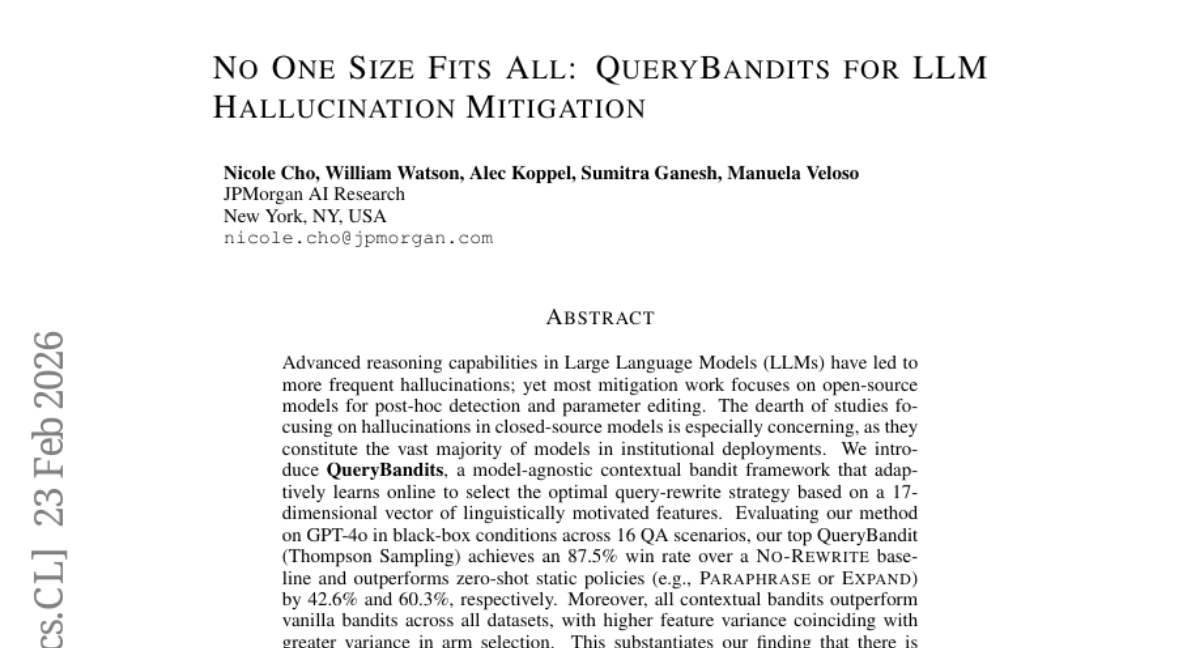
Weakly supervised object detection (WSOD) has attracted significant attention in recent years, as it does not require box-level annotations. State-of-the-art methods generally adopt a multi-module network, which employs WSDDN as the multiple instance detection network module and multiple instance refinement modules to refine performance. However, these approaches suffer from three key limitations. First, existing methods tend to generate pseudo GT boxes that either focus only on discriminative parts, failing to capture the whole object, or cover the entire object but fail to distinguish between adjacent intra-class instances. Second, the foundational WSDDN architecture lacks a crucial background class representation for each proposal and exhibits a large semantic gap between its branches. Third, prior methods discard ignored proposals during optimization, leading to slow convergence. To address these challenges, we first design a heatmap-guided proposal selector (HGPS) algorithm, which utilizes dual thresholds on heatmaps to pre-select proposals, enabling pseudo GT boxes to both capture the full object extent and distinguish between adjacent intra-class instances. We then present a weakly supervised basic detection network (WSBDN), which augments each proposal with a background class representation and uses heatmaps for pre-supervision to bridge the semantic gap between matrices. At last, we introduce a negative certainty supervision loss on ignored proposals to accelerate convergence. Extensive experiments on the challenging PASCAL VOC 2007 and 2012 datasets demonstrate the effectiveness of our framework. We achieve mAP/mCorLoc scores of 58.5%/81.8% on VOC 2007 and 55.6%/80.5% on VOC 2012, performing favorably against the state-of-the-art WSOD methods. Our code is publicly available at https://github.com/gyl2565309278/DTH-CP.
  • 8 authors
·
Sep 10, 2025

NAPA-VQ: Neighborhood Aware Prototype Augmentation with Vector Quantization for Continual Learning

Catastrophic forgetting; the loss of old knowledge upon acquiring new knowledge, is a pitfall faced by deep neural networks in real-world applications. Many prevailing solutions to this problem rely on storing exemplars (previously encountered data), which may not be feasible in applications with memory limitations or privacy constraints. Therefore, the recent focus has been on Non-Exemplar based Class Incremental Learning (NECIL) where a model incrementally learns about new classes without using any past exemplars. However, due to the lack of old data, NECIL methods struggle to discriminate between old and new classes causing their feature representations to overlap. We propose NAPA-VQ: Neighborhood Aware Prototype Augmentation with Vector Quantization, a framework that reduces this class overlap in NECIL. We draw inspiration from Neural Gas to learn the topological relationships in the feature space, identifying the neighboring classes that are most likely to get confused with each other. This neighborhood information is utilized to enforce strong separation between the neighboring classes as well as to generate old class representative prototypes that can better aid in obtaining a discriminative decision boundary between old and new classes. Our comprehensive experiments on CIFAR-100, TinyImageNet, and ImageNet-Subset demonstrate that NAPA-VQ outperforms the State-of-the-art NECIL methods by an average improvement of 5%, 2%, and 4% in accuracy and 10%, 3%, and 9% in forgetting respectively. Our code can be found in https://github.com/TamashaM/NAPA-VQ.git.

  • 3 authors
·
Aug 18, 2023

Why do Nearest Neighbor Language Models Work?

Language models (LMs) compute the probability of a text by sequentially computing a representation of an already-seen context and using this representation to predict the next word. Currently, most LMs calculate these representations through a neural network consuming the immediate previous context. However recently, retrieval-augmented LMs have shown to improve over standard neural LMs, by accessing information retrieved from a large datastore, in addition to their standard, parametric, next-word prediction. In this paper, we set out to understand why retrieval-augmented language models, and specifically why k-nearest neighbor language models (kNN-LMs) perform better than standard parametric LMs, even when the k-nearest neighbor component retrieves examples from the same training set that the LM was originally trained on. To this end, we perform a careful analysis of the various dimensions over which kNN-LM diverges from standard LMs, and investigate these dimensions one by one. Empirically, we identify three main reasons why kNN-LM performs better than standard LMs: using a different input representation for predicting the next tokens, approximate kNN search, and the importance of softmax temperature for the kNN distribution. Further, we incorporate these insights into the model architecture or the training procedure of the standard parametric LM, improving its results without the need for an explicit retrieval component. The code is available at https://github.com/frankxu2004/knnlm-why.

  • 3 authors
·
Jan 7, 2023

Relevance Filtering for Embedding-based Retrieval

In embedding-based retrieval, Approximate Nearest Neighbor (ANN) search enables efficient retrieval of similar items from large-scale datasets. While maximizing recall of relevant items is usually the goal of retrieval systems, a low precision may lead to a poor search experience. Unlike lexical retrieval, which inherently limits the size of the retrieved set through keyword matching, dense retrieval via ANN search has no natural cutoff. Moreover, the cosine similarity scores of embedding vectors are often optimized via contrastive or ranking losses, which make them difficult to interpret. Consequently, relying on top-K or cosine-similarity cutoff is often insufficient to filter out irrelevant results effectively. This issue is prominent in product search, where the number of relevant products is often small. This paper introduces a novel relevance filtering component (called "Cosine Adapter") for embedding-based retrieval to address this challenge. Our approach maps raw cosine similarity scores to interpretable scores using a query-dependent mapping function. We then apply a global threshold on the mapped scores to filter out irrelevant results. We are able to significantly increase the precision of the retrieved set, at the expense of a small loss of recall. The effectiveness of our approach is demonstrated through experiments on both public MS MARCO dataset and internal Walmart product search data. Furthermore, online A/B testing on the Walmart site validates the practical value of our approach in real-world e-commerce settings.

  • 7 authors
·
Aug 9, 2024

Semi-Parametric Neural Image Synthesis

Novel architectures have recently improved generative image synthesis leading to excellent visual quality in various tasks. Much of this success is due to the scalability of these architectures and hence caused by a dramatic increase in model complexity and in the computational resources invested in training these models. Our work questions the underlying paradigm of compressing large training data into ever growing parametric representations. We rather present an orthogonal, semi-parametric approach. We complement comparably small diffusion or autoregressive models with a separate image database and a retrieval strategy. During training we retrieve a set of nearest neighbors from this external database for each training instance and condition the generative model on these informative samples. While the retrieval approach is providing the (local) content, the model is focusing on learning the composition of scenes based on this content. As demonstrated by our experiments, simply swapping the database for one with different contents transfers a trained model post-hoc to a novel domain. The evaluation shows competitive performance on tasks which the generative model has not been trained on, such as class-conditional synthesis, zero-shot stylization or text-to-image synthesis without requiring paired text-image data. With negligible memory and computational overhead for the external database and retrieval we can significantly reduce the parameter count of the generative model and still outperform the state-of-the-art.

  • 5 authors
·
Apr 25, 2022

Noise in Relation Classification Dataset TACRED: Characterization and Reduction

The overarching objective of this paper is two-fold. First, to explore model-based approaches to characterize the primary cause of the noise. in the RE dataset TACRED Second, to identify the potentially noisy instances. Towards the first objective, we analyze predictions and performance of state-of-the-art (SOTA) models to identify the root cause of noise in the dataset. Our analysis of TACRED shows that the majority of the noise in the dataset originates from the instances labeled as no-relation which are negative examples. For the second objective, we explore two nearest-neighbor-based strategies to automatically identify potentially noisy examples for elimination and reannotation. Our first strategy, referred to as Intrinsic Strategy (IS), is based on the assumption that positive examples are clean. Thus, we have used false-negative predictions to identify noisy negative examples. Whereas, our second approach, referred to as Extrinsic Strategy, is based on using a clean subset of the dataset to identify potentially noisy negative examples. Finally, we retrained the SOTA models on the eliminated and reannotated dataset. Our empirical results based on two SOTA models trained on TACRED-E following the IS show an average 4% F1-score improvement, whereas reannotation (TACRED-R) does not improve the original results. However, following ES, SOTA models show the average F1-score improvement of 3.8% and 4.4% when trained on respective eliminated (TACRED-EN) and reannotated (TACRED-RN) datasets respectively. We further extended the ES for cleaning positive examples as well, which resulted in an average performance improvement of 5.8% and 5.6% for the eliminated (TACRED-ENP) and reannotated (TACRED-RNP) datasets respectively.

  • 3 authors
·
Nov 20, 2023

Learning from Weakly-labeled Web Videos via Exploring Sub-Concepts

Learning visual knowledge from massive weakly-labeled web videos has attracted growing research interests thanks to the large corpus of easily accessible video data on the Internet. However, for video action recognition, the action of interest might only exist in arbitrary clips of untrimmed web videos, resulting in high label noises in the temporal space. To address this issue, we introduce a new method for pre-training video action recognition models using queried web videos. Instead of trying to filter out, we propose to convert the potential noises in these queried videos to useful supervision signals by defining the concept of Sub-Pseudo Label (SPL). Specifically, SPL spans out a new set of meaningful "middle ground" label space constructed by extrapolating the original weak labels during video querying and the prior knowledge distilled from a teacher model. Consequently, SPL provides enriched supervision for video models to learn better representations. SPL is fairly simple and orthogonal to popular teacher-student self-training frameworks without extra training cost. We validate the effectiveness of our method on four video action recognition datasets and a weakly-labeled image dataset to study the generalization ability. Experiments show that SPL outperforms several existing pre-training strategies using pseudo-labels and the learned representations lead to competitive results when fine-tuning on HMDB-51 and UCF-101 compared with recent pre-training methods.

  • 8 authors
·
Jan 11, 2021

Adapting Pre-Trained Vision Models for Novel Instance Detection and Segmentation

Novel Instance Detection and Segmentation (NIDS) aims at detecting and segmenting novel object instances given a few examples of each instance. We propose a unified, simple, yet effective framework (NIDS-Net) comprising object proposal generation, embedding creation for both instance templates and proposal regions, and embedding matching for instance label assignment. Leveraging recent advancements in large vision methods, we utilize Grounding DINO and Segment Anything Model (SAM) to obtain object proposals with accurate bounding boxes and masks. Central to our approach is the generation of high-quality instance embeddings. We utilized foreground feature averages of patch embeddings from the DINOv2 ViT backbone, followed by refinement through a weight adapter mechanism that we introduce. We show experimentally that our weight adapter can adjust the embeddings locally within their feature space and effectively limit overfitting in the few-shot setting. Furthermore, the weight adapter optimizes weights to enhance the distinctiveness of instance embeddings during similarity computation. This methodology enables a straightforward matching strategy that results in significant performance gains. Our framework surpasses current state-of-the-art methods, demonstrating notable improvements in four detection datasets. In the segmentation tasks on seven core datasets of the BOP challenge, our method outperforms the leading published RGB methods and remains competitive with the best RGB-D method. We have also verified our method using real-world images from a Fetch robot and a RealSense camera. Project Page: https://irvlutd.github.io/NIDSNet/

  • 5 authors
·
May 28, 2024

Beyond Nearest Neighbors: Semantic Compression and Graph-Augmented Retrieval for Enhanced Vector Search

Vector databases typically rely on approximate nearest neighbor (ANN) search to retrieve the top-k closest vectors to a query in embedding space. While effective, this approach often yields semantically redundant results, missing the diversity and contextual richness required by applications such as retrieval-augmented generation (RAG), multi-hop QA, and memory-augmented agents. We introduce a new retrieval paradigm: semantic compression, which aims to select a compact, representative set of vectors that captures the broader semantic structure around a query. We formalize this objective using principles from submodular optimization and information geometry, and show that it generalizes traditional top-k retrieval by prioritizing coverage and diversity. To operationalize this idea, we propose graph-augmented vector retrieval, which overlays semantic graphs (e.g., kNN or knowledge-based links) atop vector spaces to enable multi-hop, context-aware search. We theoretically analyze the limitations of proximity-based retrieval under high-dimensional concentration and highlight how graph structures can improve semantic coverage. Our work outlines a foundation for meaning-centric vector search systems, emphasizing hybrid indexing, diversity-aware querying, and structured semantic retrieval. We make our implementation publicly available to foster future research in this area.

  • 2 authors
·
Jul 25, 2025

Masked Scene Modeling: Narrowing the Gap Between Supervised and Self-Supervised Learning in 3D Scene Understanding

Self-supervised learning has transformed 2D computer vision by enabling models trained on large, unannotated datasets to provide versatile off-the-shelf features that perform similarly to models trained with labels. However, in 3D scene understanding, self-supervised methods are typically only used as a weight initialization step for task-specific fine-tuning, limiting their utility for general-purpose feature extraction. This paper addresses this shortcoming by proposing a robust evaluation protocol specifically designed to assess the quality of self-supervised features for 3D scene understanding. Our protocol uses multi-resolution feature sampling of hierarchical models to create rich point-level representations that capture the semantic capabilities of the model and, hence, are suitable for evaluation with linear probing and nearest-neighbor methods. Furthermore, we introduce the first self-supervised model that performs similarly to supervised models when only off-the-shelf features are used in a linear probing setup. In particular, our model is trained natively in 3D with a novel self-supervised approach based on a Masked Scene Modeling objective, which reconstructs deep features of masked patches in a bottom-up manner and is specifically tailored to hierarchical 3D models. Our experiments not only demonstrate that our method achieves competitive performance to supervised models, but also surpasses existing self-supervised approaches by a large margin. The model and training code can be found at our Github repository (https://github.com/phermosilla/msm).

  • 3 authors
·
Apr 9, 2025 2

DenseCLIP: Language-Guided Dense Prediction with Context-Aware Prompting

Recent progress has shown that large-scale pre-training using contrastive image-text pairs can be a promising alternative for high-quality visual representation learning from natural language supervision. Benefiting from a broader source of supervision, this new paradigm exhibits impressive transferability to downstream classification tasks and datasets. However, the problem of transferring the knowledge learned from image-text pairs to more complex dense prediction tasks has barely been visited. In this work, we present a new framework for dense prediction by implicitly and explicitly leveraging the pre-trained knowledge from CLIP. Specifically, we convert the original image-text matching problem in CLIP to a pixel-text matching problem and use the pixel-text score maps to guide the learning of dense prediction models. By further using the contextual information from the image to prompt the language model, we are able to facilitate our model to better exploit the pre-trained knowledge. Our method is model-agnostic, which can be applied to arbitrary dense prediction systems and various pre-trained visual backbones including both CLIP models and ImageNet pre-trained models. Extensive experiments demonstrate the superior performance of our methods on semantic segmentation, object detection, and instance segmentation tasks. Code is available at https://github.com/raoyongming/DenseCLIP

  • 8 authors
·
Dec 2, 2021

Enhancing Dataset Distillation via Non-Critical Region Refinement

Dataset distillation has become a popular method for compressing large datasets into smaller, more efficient representations while preserving critical information for model training. Data features are broadly categorized into two types: instance-specific features, which capture unique, fine-grained details of individual examples, and class-general features, which represent shared, broad patterns across a class. However, previous approaches often struggle to balance these features-some focus solely on class-general patterns, neglecting finer instance details, while others prioritize instance-specific features, overlooking the shared characteristics essential for class-level understanding. In this paper, we introduce the Non-Critical Region Refinement Dataset Distillation (NRR-DD) method, which preserves instance-specific details and fine-grained regions in synthetic data while enriching non-critical regions with class-general information. This approach enables models to leverage all pixel information, capturing both feature types and enhancing overall performance. Additionally, we present Distance-Based Representative (DBR) knowledge transfer, which eliminates the need for soft labels in training by relying on the distance between synthetic data predictions and one-hot encoded labels. Experimental results show that NRR-DD achieves state-of-the-art performance on both small- and large-scale datasets. Furthermore, by storing only two distances per instance, our method delivers comparable results across various settings. The code is available at https://github.com/tmtuan1307/NRR-DD.

  • 5 authors
·
Mar 23, 2025

Learning Transferable Visual Models From Natural Language Supervision

State-of-the-art computer vision systems are trained to predict a fixed set of predetermined object categories. This restricted form of supervision limits their generality and usability since additional labeled data is needed to specify any other visual concept. Learning directly from raw text about images is a promising alternative which leverages a much broader source of supervision. We demonstrate that the simple pre-training task of predicting which caption goes with which image is an efficient and scalable way to learn SOTA image representations from scratch on a dataset of 400 million (image, text) pairs collected from the internet. After pre-training, natural language is used to reference learned visual concepts (or describe new ones) enabling zero-shot transfer of the model to downstream tasks. We study the performance of this approach by benchmarking on over 30 different existing computer vision datasets, spanning tasks such as OCR, action recognition in videos, geo-localization, and many types of fine-grained object classification. The model transfers non-trivially to most tasks and is often competitive with a fully supervised baseline without the need for any dataset specific training. For instance, we match the accuracy of the original ResNet-50 on ImageNet zero-shot without needing to use any of the 1.28 million training examples it was trained on. We release our code and pre-trained model weights at https://github.com/OpenAI/CLIP.

  • 12 authors
·
Feb 26, 2021 3

Towards Seamless Adaptation of Pre-trained Models for Visual Place Recognition

Recent studies show that vision models pre-trained in generic visual learning tasks with large-scale data can provide useful feature representations for a wide range of visual perception problems. However, few attempts have been made to exploit pre-trained foundation models in visual place recognition (VPR). Due to the inherent difference in training objectives and data between the tasks of model pre-training and VPR, how to bridge the gap and fully unleash the capability of pre-trained models for VPR is still a key issue to address. To this end, we propose a novel method to realize seamless adaptation of pre-trained models for VPR. Specifically, to obtain both global and local features that focus on salient landmarks for discriminating places, we design a hybrid adaptation method to achieve both global and local adaptation efficiently, in which only lightweight adapters are tuned without adjusting the pre-trained model. Besides, to guide effective adaptation, we propose a mutual nearest neighbor local feature loss, which ensures proper dense local features are produced for local matching and avoids time-consuming spatial verification in re-ranking. Experimental results show that our method outperforms the state-of-the-art methods with less training data and training time, and uses about only 3% retrieval runtime of the two-stage VPR methods with RANSAC-based spatial verification. It ranks 1st on the MSLS challenge leaderboard (at the time of submission). The code is released at https://github.com/Lu-Feng/SelaVPR.

  • 6 authors
·
Feb 22, 2024 1

PatentSBERTa: A Deep NLP based Hybrid Model for Patent Distance and Classification using Augmented SBERT

This study provides an efficient approach for using text data to calculate patent-to-patent (p2p) technological similarity, and presents a hybrid framework for leveraging the resulting p2p similarity for applications such as semantic search and automated patent classification. We create embeddings using Sentence-BERT (SBERT) based on patent claims. We leverage SBERTs efficiency in creating embedding distance measures to map p2p similarity in large sets of patent data. We deploy our framework for classification with a simple Nearest Neighbors (KNN) model that predicts Cooperative Patent Classification (CPC) of a patent based on the class assignment of the K patents with the highest p2p similarity. We thereby validate that the p2p similarity captures their technological features in terms of CPC overlap, and at the same demonstrate the usefulness of this approach for automatic patent classification based on text data. Furthermore, the presented classification framework is simple and the results easy to interpret and evaluate by end-users. In the out-of-sample model validation, we are able to perform a multi-label prediction of all assigned CPC classes on the subclass (663) level on 1,492,294 patents with an accuracy of 54% and F1 score > 66%, which suggests that our model outperforms the current state-of-the-art in text-based multi-label and multi-class patent classification. We furthermore discuss the applicability of the presented framework for semantic IP search, patent landscaping, and technology intelligence. We finally point towards a future research agenda for leveraging multi-source patent embeddings, their appropriateness across applications, as well as to improve and validate patent embeddings by creating domain-expert curated Semantic Textual Similarity (STS) benchmark datasets.

  • 3 authors
·
Mar 22, 2021

A Practical Approach to Novel Class Discovery in Tabular Data

The problem of Novel Class Discovery (NCD) consists in extracting knowledge from a labeled set of known classes to accurately partition an unlabeled set of novel classes. While NCD has recently received a lot of attention from the community, it is often solved on computer vision problems and under unrealistic conditions. In particular, the number of novel classes is usually assumed to be known in advance, and their labels are sometimes used to tune hyperparameters. Methods that rely on these assumptions are not applicable in real-world scenarios. In this work, we focus on solving NCD in tabular data when no prior knowledge of the novel classes is available. To this end, we propose to tune the hyperparameters of NCD methods by adapting the k-fold cross-validation process and hiding some of the known classes in each fold. Since we have found that methods with too many hyperparameters are likely to overfit these hidden classes, we define a simple deep NCD model. This method is composed of only the essential elements necessary for the NCD problem and performs impressively well under realistic conditions. Furthermore, we find that the latent space of this method can be used to reliably estimate the number of novel classes. Additionally, we adapt two unsupervised clustering algorithms (k-means and Spectral Clustering) to leverage the knowledge of the known classes. Extensive experiments are conducted on 7 tabular datasets and demonstrate the effectiveness of the proposed method and hyperparameter tuning process, and show that the NCD problem can be solved without relying on knowledge from the novel classes.

  • 5 authors
·
Nov 9, 2023

G-SimCLR : Self-Supervised Contrastive Learning with Guided Projection via Pseudo Labelling

In the realms of computer vision, it is evident that deep neural networks perform better in a supervised setting with a large amount of labeled data. The representations learned with supervision are not only of high quality but also helps the model in enhancing its accuracy. However, the collection and annotation of a large dataset are costly and time-consuming. To avoid the same, there has been a lot of research going on in the field of unsupervised visual representation learning especially in a self-supervised setting. Amongst the recent advancements in self-supervised methods for visual recognition, in SimCLR Chen et al. shows that good quality representations can indeed be learned without explicit supervision. In SimCLR, the authors maximize the similarity of augmentations of the same image and minimize the similarity of augmentations of different images. A linear classifier trained with the representations learned using this approach yields 76.5% top-1 accuracy on the ImageNet ILSVRC-2012 dataset. In this work, we propose that, with the normalized temperature-scaled cross-entropy (NT-Xent) loss function (as used in SimCLR), it is beneficial to not have images of the same category in the same batch. In an unsupervised setting, the information of images pertaining to the same category is missing. We use the latent space representation of a denoising autoencoder trained on the unlabeled dataset and cluster them with k-means to obtain pseudo labels. With this apriori information we batch images, where no two images from the same category are to be found. We report comparable performance enhancements on the CIFAR10 dataset and a subset of the ImageNet dataset. We refer to our method as G-SimCLR.

  • 3 authors
·
Sep 24, 2020

Neighboring Autoregressive Modeling for Efficient Visual Generation

Visual autoregressive models typically adhere to a raster-order ``next-token prediction" paradigm, which overlooks the spatial and temporal locality inherent in visual content. Specifically, visual tokens exhibit significantly stronger correlations with their spatially or temporally adjacent tokens compared to those that are distant. In this paper, we propose Neighboring Autoregressive Modeling (NAR), a novel paradigm that formulates autoregressive visual generation as a progressive outpainting procedure, following a near-to-far ``next-neighbor prediction" mechanism. Starting from an initial token, the remaining tokens are decoded in ascending order of their Manhattan distance from the initial token in the spatial-temporal space, progressively expanding the boundary of the decoded region. To enable parallel prediction of multiple adjacent tokens in the spatial-temporal space, we introduce a set of dimension-oriented decoding heads, each predicting the next token along a mutually orthogonal dimension. During inference, all tokens adjacent to the decoded tokens are processed in parallel, substantially reducing the model forward steps for generation. Experiments on ImageNet256times 256 and UCF101 demonstrate that NAR achieves 2.4times and 8.6times higher throughput respectively, while obtaining superior FID/FVD scores for both image and video generation tasks compared to the PAR-4X approach. When evaluating on text-to-image generation benchmark GenEval, NAR with 0.8B parameters outperforms Chameleon-7B while using merely 0.4 of the training data. Code is available at https://github.com/ThisisBillhe/NAR.

  • 7 authors
·
Mar 12, 2025 3

Target before Shooting: Accurate Anomaly Detection and Localization under One Millisecond via Cascade Patch Retrieval

In this work, by re-examining the "matching" nature of Anomaly Detection (AD), we propose a new AD framework that simultaneously enjoys new records of AD accuracy and dramatically high running speed. In this framework, the anomaly detection problem is solved via a cascade patch retrieval procedure that retrieves the nearest neighbors for each test image patch in a coarse-to-fine fashion. Given a test sample, the top-K most similar training images are first selected based on a robust histogram matching process. Secondly, the nearest neighbor of each test patch is retrieved over the similar geometrical locations on those "global nearest neighbors", by using a carefully trained local metric. Finally, the anomaly score of each test image patch is calculated based on the distance to its "local nearest neighbor" and the "non-background" probability. The proposed method is termed "Cascade Patch Retrieval" (CPR) in this work. Different from the conventional patch-matching-based AD algorithms, CPR selects proper "targets" (reference images and locations) before "shooting" (patch-matching). On the well-acknowledged MVTec AD, BTAD and MVTec-3D AD datasets, the proposed algorithm consistently outperforms all the comparing SOTA methods by remarkable margins, measured by various AD metrics. Furthermore, CPR is extremely efficient. It runs at the speed of 113 FPS with the standard setting while its simplified version only requires less than 1 ms to process an image at the cost of a trivial accuracy drop. The code of CPR is available at https://github.com/flyinghu123/CPR.

  • 6 authors
·
Aug 13, 2023